
How Does a Schumann Resonance Generator Work?
The Earth constantly emits very low-frequency electromagnetic waves known as Schumann resonances. These natural signals occur in the space between the Earth's surface and the ionosphere, creating a global electromagnetic resonance. A Schumann resonance generator is a device designed to replicate or enhance these frequencies for various applications, including scientific research, wellness, and environmental monitoring. Understanding how this generator works requires a look at the science behind Schumann resonances and the technology used to produce them artificially.

What Are Schumann Resonances?
Schumann resonances are a set of spectrum peaks in the extremely low-frequency (ELF) portion of the Earth's electromagnetic field spectrum. They occur because the space between the Earth's surface and the ionosphere acts like a cavity that traps electromagnetic waves. When lightning strikes, it excites this cavity, causing it to resonate at specific frequencies, primarily around 7.83 Hz, with additional harmonics at approximately 14, 20, 26, 33, 39, and 45 Hz.
These resonances are important because they represent a natural electromagnetic environment that has existed for millions of years. Some researchers suggest that these frequencies influence biological rhythms and may affect human health and well-being.
The Purpose of a Schumann Resonance Generator
A Schumann resonance generator creates artificial ELF electromagnetic waves that mimic the natural Schumann frequencies. People use these devices for several reasons:
Scientific experiments to study the effects of ELF waves on biological systems.
Meditation and relaxation by providing a calming electromagnetic environment.
Environmental monitoring to detect changes in the Earth's electromagnetic field.
Alternative health practices that claim to balance or enhance energy fields.
While scientific consensus on health benefits remains limited, the technology behind these generators is well-established.
How the Generator Produces Schumann Frequencies
At its core, a Schumann resonance generator produces low-frequency electromagnetic waves using electronic components. Here’s how it works step-by-step:
1. Frequency Generation
The device uses an oscillator circuit to create a stable, low-frequency electrical signal. This oscillator can be based on components such as:
Quartz crystals for precise frequency control.
RC (resistor-capacitor) or LC (inductor-capacitor) circuits for tuning.
Microcontrollers or digital signal processors for programmable frequencies.
The oscillator is set to generate the fundamental Schumann frequency (around 7.83 Hz) or one of its harmonics.
2. Signal Amplification
The weak signal from the oscillator is then amplified to a level sufficient to produce a measurable electromagnetic field. This amplification stage uses transistors or operational amplifiers to boost the signal without distorting its frequency.
3. Electromagnetic Field Emission
The amplified signal drives an antenna or coil that emits the ELF electromagnetic waves into the surrounding environment. The design of this antenna is critical because ELF waves have very long wavelengths (thousands of kilometers), making efficient transmission challenging.
Common antenna types include:
Large loop antennas that create magnetic fields.
Grounded vertical antennas for electric field generation.
4. Frequency Stability and Control
Maintaining a stable frequency is essential for the generator to produce consistent Schumann resonance waves. The device often includes feedback mechanisms or temperature compensation to prevent frequency drift.
Practical Examples of Schumann Resonance Generators
Several models of Schumann resonance generators exist, ranging from simple DIY kits to advanced commercial devices. For example:
DIY kits often use a 555 timer IC to generate a square wave at 7.83 Hz, which is then fed to a coil to create a magnetic field.
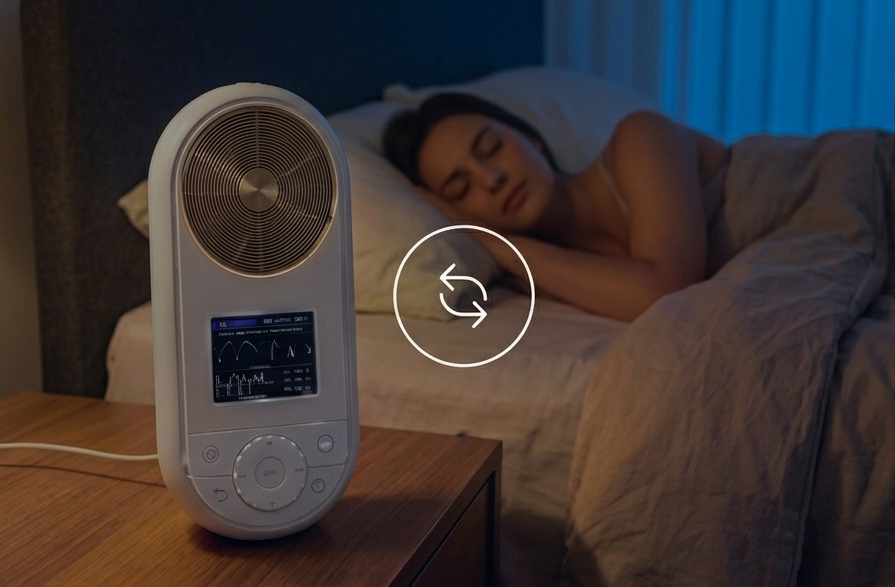
Commercial devices may include digital controls to select different frequencies and output modes, along with built-in amplifiers and antennas designed for home or laboratory use.
These devices are typically compact and can be powered by batteries or standard electrical outlets.

Challenges in Generating Schumann Resonances
Generating Schumann resonance frequencies artificially involves several challenges:
Wavelength size: The natural Schumann resonance wavelength is about 38,000 kilometers, making it impossible to replicate the exact scale in a small device.
Signal strength: The Earth's natural signals are very weak, so generating a comparable field requires careful design to avoid interference.
Environmental factors: Nearby electronic devices, buildings, and atmospheric conditions can affect the generator’s performance.
Despite these challenges, devices can produce localized ELF fields that approximate Schumann resonances for experimental or personal use.
Applications and Considerations
People use Schumann resonance generators in various ways:
Meditation and sleep improvement: Some users report better relaxation when exposed to these frequencies.
Research: Scientists study how ELF waves affect brain waves and biological rhythms.
Environmental sensing: Monitoring changes in Schumann resonances can provide data about solar activity or atmospheric disturbances.
It is important to approach claims about health benefits with caution. While some studies suggest correlations between ELF exposure and well-being, more rigorous research is needed.
Summary
A Schumann resonance generator works by creating low-frequency electromagnetic waves that mimic the Earth's natural resonances. It uses an oscillator to produce a stable frequency, amplifies the signal, and emits it through an antenna or coil. While it cannot replicate the full scale of natural Schumann resonances, it can generate localized fields useful for research and personal applications.
Understanding how these devices function helps users make informed decisions about their use and potential benefits. If you are interested in exploring Schumann resonance generators, consider starting with a simple model and observing how it affects your environment or well-being.


Comments